
Defense innovation funding
DoD SBIR Grant Consultants for Defense & Dual-Use Technology
The three-phase structure
Phase I
Feasibility
Typically up to ~$250K over 6 to 12 months to prove the concept answers the topic. The technical volume and the transition plan both score from day one.
Phase II
Prototype development
Commonly $1.7M+ over up to two years to build and demonstrate a prototype. A letter of interest from an end user or program office carries real weight.
Phase III
Transition to program of record
Follow-on contracts funded with non-SBIR defense money. Phase III is where DoD SBIR outperforms every other agency: a direct route to sole-source federal contracts.
Award amounts, topics and release dates change each cycle. Confirm current topics at dodsbirsttr.mil.
How DoD reviewers score your proposal
Mission relevance
Reviewers ask one question first: does this solve the problem in the topic? Proposals that drift into general commercial storytelling lose the defense reader immediately.
Technical merit and feasibility
A clear technical approach, measurable milestones and an honest treatment of risk. DoD reviewers include uniformed and civilian technical staff who know the operational environment.
Transition potential
Who will field this, and on what timeline? Letters from program offices, primes or end users, and a credible dual-use commercial case, separate winners from strong also-rans.
Team and facilities
Evidence the PI, key personnel and facilities can deliver in a defense context, including any needed clearances, test ranges or manufacturing capability.
DoD SBIR eligibility
- A for-profit US small business with 500 or fewer employees
- More than 50% owned by US citizens or permanent residents
- Principal investigator primarily employed by the company (SBIR)
- At least two-thirds of Phase I work performed by the small business
- Research performed in the United States
- Registered in SAM.gov with a current CAGE code
Partnering with a university or federal lab? The DoD STTR route lets the research institution hold a share of the work and can strengthen transition credibility. We will tell you which route fits your team before you start writing. Compare SBIR and STTR.
Our DoD SBIR writing process
01
Topic and component fit
We read the topic the way the program office wrote it, identify which component and which release cycle fits your technology, and flag the topics to avoid.
02
Mission framing first
Before any technical writing, we build the transition narrative: the operational gap, the end user and the path from prototype to program of record.
03
Full technical volume
Our writers draft the technical approach, milestones and commercialization plan with your team, then run an internal review that mirrors how DoD panels score.
04
Submission and beyond
We handle SAM.gov, the DoD submission portal and formatting compliance, and if the first attempt misses, we rebuild around reviewer feedback for the next cycle.
The people who write your submission
Named consultants with federal review experience across defense-adjacent sectors: cyber security, aerospace, advanced manufacturing and wireless communications.

Dr Thomas Kelly
Lead Innovation Consultant
Has written and won SBIR submissions and reviewed Phase I proposals, so he reads a draft the way a reviewer does.
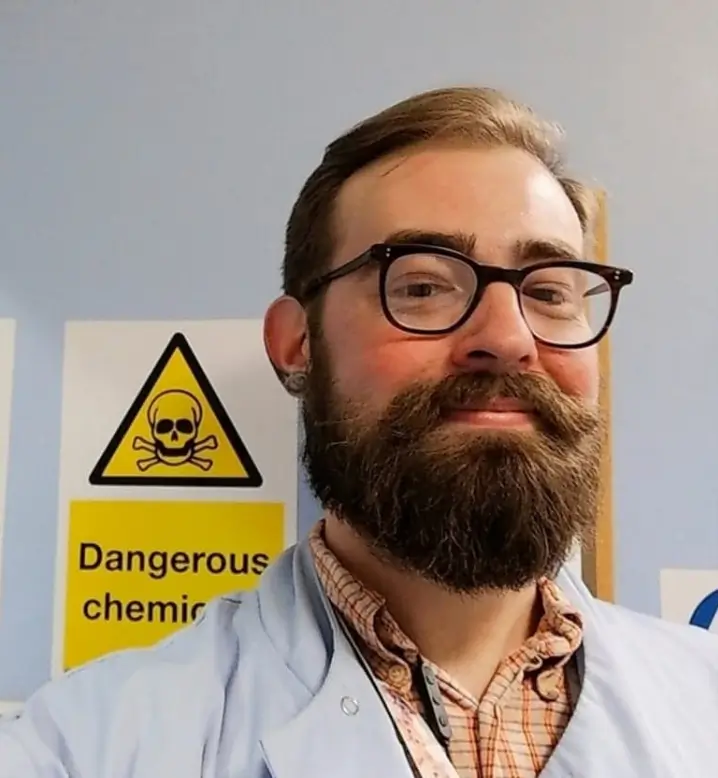
Dr Felix Warren
Lead Innovation Consultant
Writes SBIR Phase I applications across federal agencies and has reviewed more than 500 grant applications from the other side of the table.

Jessica Vernon
Lead Innovation Consultant
Writes Phase I and Phase II applications across NSF, NIH and DOE, with deep experience framing dual-use technology for federal reviewers.
DoD SBIR questions founders ask us
Who is eligible for DoD SBIR funding?
For-profit US small businesses with 500 or fewer employees, majority owned by US citizens or permanent residents, performing the research in the United States. DoD also runs STTR, which requires a formal partnership with a US research institution.
How much funding does DoD SBIR provide?
Phase I awards are typically up to roughly $250K for a feasibility study, with Phase II awards commonly reaching $1.7M or more depending on the component and topic. DoD also offers Direct to Phase II topics for technologies that already have proof of feasibility.
How is DoD SBIR different from NSF or NIH SBIR?
DoD is mission-driven. Each topic is written by a defense program office with a specific operational need, and your proposal must show both technical merit and a credible path to transition into a defense program of record. NSF funds broad commercial innovation; NIH funds health research; DoD funds answers to stated military problems.
Which DoD components run SBIR programs?
The Army, Navy, Air Force (including AFWERX and Space Force topics), DARPA, the Missile Defense Agency, SOCOM and others each release their own topics through the DoD SBIR/STTR portal, typically on pre-announced cycles through the year.
Free download
NSF SBIR Phase I readiness checklist and federal deadline calendar
Two pages, no email required. Every registration, eligibility test and proposal section you need before you write, plus the next deadline for NSF, NIH, DoD, DOE, NASA and USDA with the date you realistically need to start.
- 37-point readiness checklist
- Six agency deadlines with lead times
Planning a DoD SBIR submission?
Book a free consultation and we will assess your fit against current topics and component cycles before you write a word.