
America's largest funder of biomedical research
NIH SBIR Grant Consultants for Biotech & Life Sciences
The three-phase structure
Phase I
Feasibility
Roughly $314K over 6 to 12 months to prove scientific and technical merit. Preliminary data and a tight, hypothesis-driven aims page carry the score.
Phase II
Development
Roughly $2.1M over two years to develop the technology, run larger studies and build the regulatory and reimbursement case.
Phase III
Commercialization
No SBIR funds, but Phase III covers follow-on work, non-competitive federal contracts, licensing and private investment built on the award.
Award guidelines, paylines and deadlines change each cycle. Confirm current figures at seed.nih.gov.
How NIH study sections score your application
Significance
Does this address an important problem in human health? Reviewers want the clinical or public health gap stated with evidence, not adjectives.
Innovation
A genuine shift over current standard of care or existing tools, not an incremental improvement dressed up as a breakthrough.
Approach
Specific aims that stand alone, feasible milestones, statistical power, controls and an honest treatment of pitfalls and alternatives.
Investigators & environment
Evidence the PI, consultants and facilities can deliver. Weak letters of support and thin biosketches quietly cost points.
NIH SBIR eligibility
- A for-profit US small business with 500 or fewer employees
- More than 50% owned by US citizens or permanent residents
- Principal investigator primarily employed by the company (SBIR)
- At least 67% of Phase I work performed by the small business
- Research performed in the United States
- Registered in SAM.gov, eRA Commons and SBA company registry
Working with a university lab? The STTR route lets your academic partner hold up to 70% of the work and the PI can sit at the institution. We will tell you which of the two fits your team before you start writing.
Our PhD-led NIH writing process
01
Institute and study section fit
We identify which NIH institute funds your area, whether an active funding opportunity or the omnibus route is stronger, and which study section will read the science.
02
Specific aims first
One page decides most of your score. We iterate the aims with you until the hypothesis, milestones and impact are unarguable.
03
Full research strategy
A PhD in your field writes the research strategy, commercialization plan and supporting documents with you, then we run an internal review that mirrors a study section.
04
Submission and resubmission
We handle eRA Commons and SAM registrations, deadlines and formatting, and if you are not funded first time, we rebuild the application around the summary statement.
The people who write your submission
Named PhD-level consultants and subject matter experts, not software and not a template library.

Jessica Vernon
Lead Innovation Consultant
Writes Project Pitch, Phase I and Phase II applications for NIH, NSF and DOE, and has taken companies through successful submissions.
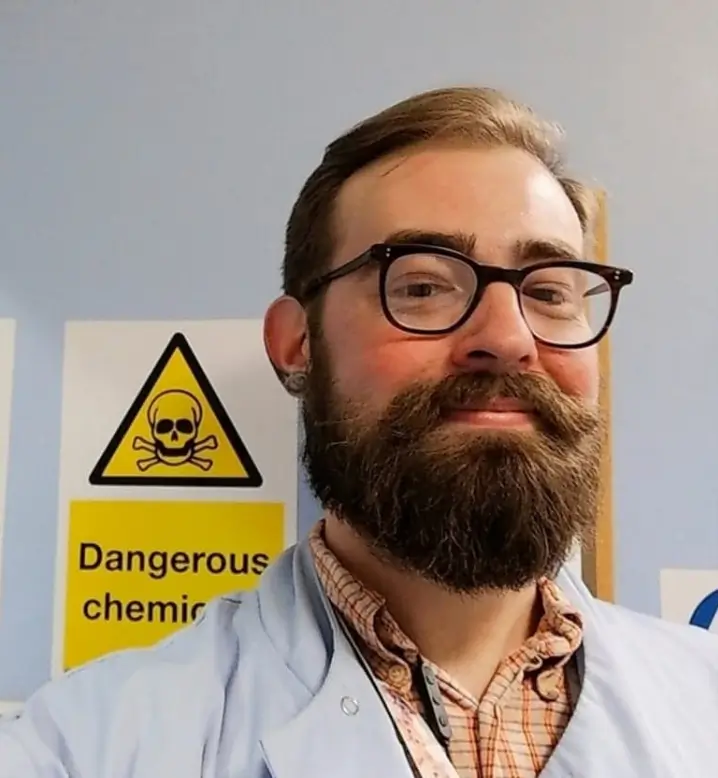
Dr Felix Warren
Lead Innovation Consultant
Writes NIH and NSF Phase I applications and has reviewed more than 500 grant applications from the other side of the table.

Dr Thomas Kelly
Lead Innovation Consultant
Has written and won SBIR submissions and reviewed Phase I proposals, so he reads a draft the way a reviewer does.
NIH SBIR questions founders ask us
Who is eligible for NIH SBIR funding?
For-profit US small businesses with 500 or fewer employees, more than 50% owned by US citizens or permanent residents. The principal investigator must be primarily employed by the company for SBIR, while STTR allows the PI to sit at the partner research institution.
How much funding does NIH SBIR provide?
NIH guidelines are around $314,000 for Phase I and around $2.1 million for Phase II, and NIH will consider budgets above those levels for topics on its published waiver list.
What is the difference between NIH SBIR and STTR?
STTR requires a formal partnership with a research institution such as a university, with at least 30% of the work at the institution and 40% at the small business. SBIR requires at least 67% of Phase I work at the small business.
How is an NIH application scored?
A study section of scientific peers scores significance, investigators, innovation, approach and environment on a 1 to 9 scale. The overall impact score, then institute priorities and payline, decide funding.
Free download
NSF SBIR Phase I readiness checklist and federal deadline calendar
Two pages, no email required. Every registration, eligibility test and proposal section you need before you write, plus the next deadline for NSF, NIH, DoD, DOE, NASA and USDA with the date you realistically need to start.
- 37-point readiness checklist
- Six agency deadlines with lead times
Planning an NIH SBIR submission?
Book a free consultation and we will assess your fit, institute and deadline before you write a word.